
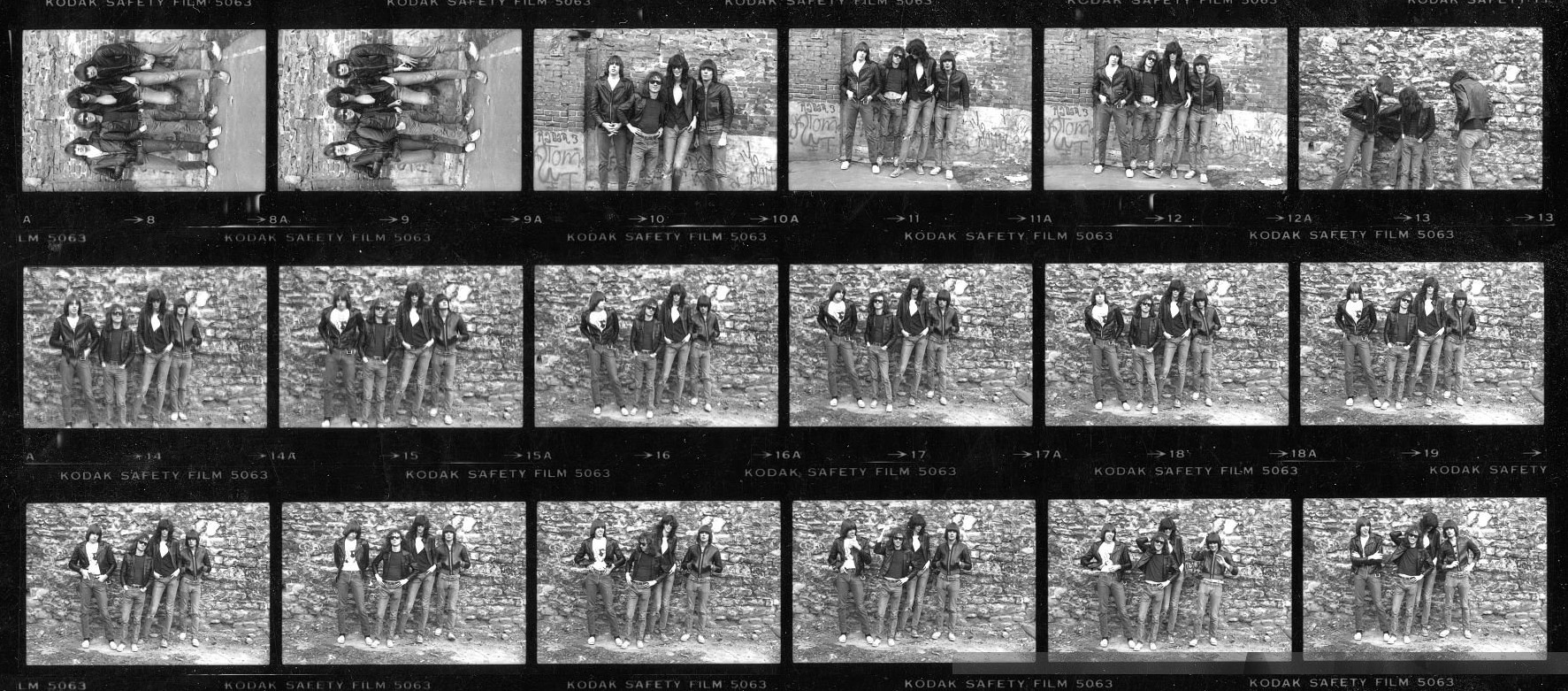
Humans love to measure, categorize, and mark time, and since I’m human, let me say that Friday, April 23, 1976, was the day that what we now call Punk Rock was born. Because that’s the day an album called RAMONES showed up in record stores all over America and changed all of the rules.
Dave Marsh might have called some bands “punk” in Creem magazine in 1971, but no one really used that term to describe a new music movement until the mid-70s, when a handful of New York City bands raised their pockmarked heads above the Rockaway Beach surf, and newspaper and magazine writers around the world needed a name to call them.
As a teenager, my crowd adopted the Punk moniker, but only grudgingly. The other option in that era was New Wave, and we knew we weren’t that. To us, Punk was an approach to music that began with the Stooges, continued through the New York Dolls, and crystallized—or maybe calcified—with The Ramones.
There was a whole world outside those bands, of course, but those three were our Rosetta Stone into new music, and the translation of that stone, the thing that broke the code, was the first Ramones album. It’s not as if the Stooges and New York Dolls albums were some sort of complex prog rock puzzle that had to be dissected and analyzed in order to be emulated, but even in their simplicity, they were a bit more challenging to play than what The Ramones laid out for us.
I want to say I heard RAMONES the day it was released, but it was more likely sometime that weekend. I remember it pretty vividly, sitting in my friend Jimmy’s bedroom (because he had a better stereo than I did), and dropping the needle onto that first track. What I don’t remember is why I bought it. Was it just the cover? It wouldn’t be the first time that happened. Was it an ad in Creem? Something written in Rock Scene? Or was it just the universe saying, “Kid, if you like that noise, you’re gonna love this noise.”
Whatever the reason, that record was a revelation. The Stooges and the New York Dolls still seemed like ROCK STARS to me. Like I couldn’t do what they did. The Ramones – well, I knew I could do what they did, because I did it. We just sat in awestruck amazement on the first listen (which didn’t take long, since the album’s 14 songs last less than 30 minutes), then started the record again, this time picking up our guitars to play along.
My friend played bass; I played guitar, and right away we realized that turning the stereo balance knob all the way to the left gave you drums, vocals, and bass – no guitar, and all the way to the right was drums, vocals, and guitar – no bass. It was like follow-the-bouncing-ball for young punks.
The most profound thing RAMONES did for my generation was to democratize music for whoever was paying attention. It instantly and irreversibly toppled the moldy castle on the hill where Yes and Emerson, Lake, and Palmer gorged themselves on turkey legs and mead. It made the bluster and pompousness of ROCK MUSIC—such as it had become by the mid-70s—immediately laughable. Because the Ramones were laughing at all of it, just by existing.
Their lyrics, taken at face value, were remarkably dumb and minimalistic. But that was the point. Their dumbness made them hilarious. If you got it, you got it, and it was impossible to climb back onto the stairway to heaven after hearing them.
The Ramones always said they really wanted to be The Beach Boys, but they didn’t have the musical ability to play pop music properly. That may have been a good quote, but it was far from the truth.
The Ramones were very purposely what they were, and everything was part of the whole. The speed at which they played, their punishing volume, beat-on-the-brat lyrical content, bowl haircuts, and motorcycle jackets all represented something completely new and different within the strict rules of rock and roll. Something free and modern.
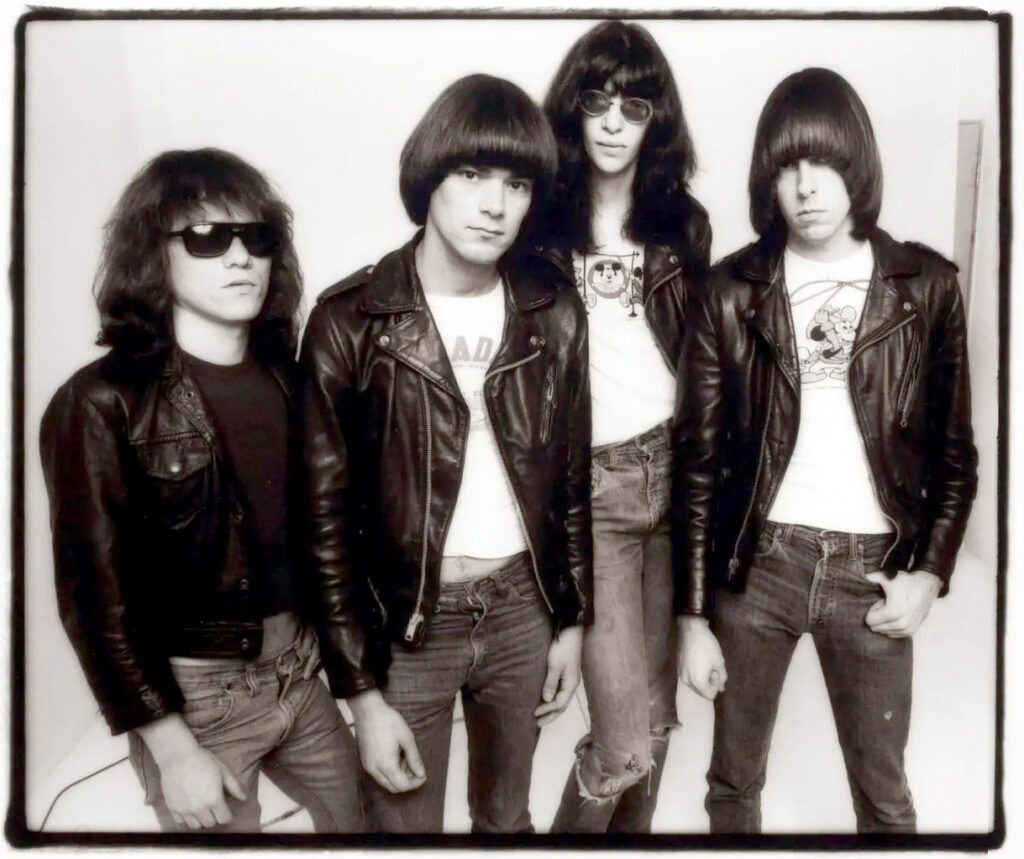
I said “calcified” earlier because most of the world looked at the Ramones experience and, rather than building on it or using it as a touchpoint, simply cloned it endlessly, as the world will do, until “punk” meant nothing but loud, fast music played by boys in leather jackets.
We have England to thank for that, I suppose, since their version of punk had a lot of rules, where the original New York City punk had none. The original punk scene was inclusive, open, and experimental. Punk, as a thing, quickly became the opposite, which is why many of the people originally described as “punk” later claimed they were no such thing.
I recently wrote (on a website for one of my punk bands) that “punk wasn’t a time and punk isn’t a music, punk is an attitude, and that attitude is self-sufficient, inclusive, radical, and humanistic. Punk is the power of the people and cannot be contained or commodified.”
And I believe that, so I still claim punk as something that’s part of me. Because if I look at it objectively, the experience of punk, or that particular change in the weather, shaped me in ways that still affect me. You could say that about anything that you encountered when you were young; mine just happens to be punk rock (and reggae, but that’s a wildly different story).
The inescapable postscript to this is that all of the original Ramones are gone. All of the New York Dolls are gone. One day we’ll all be gone, then what? Time is the enemy of history, and if you’re lucky enough to live a relatively long life, you get to witness that firsthand. We don’t even understand the true history of things that happened a few decades ago; what chance do future generations have of understanding how something like punk came to be?
No chance, I think, is the answer. But I wonder if that even matters much to anyone who didn’t live it or love it? Probably not. The history of music, of any kind, is just becoming part of the blurry mushroom cloud that is music consumption in the 21st century. Millions of songs with zero context or meaning.
But rather than feeling some kind of way about that, I choose to feel grateful for having been part of a couple of the last real musical revolutions to take place before the hypnotic fog of technology deposited us all at the feet of the AI gods. FTW!
Discover more from Wow. A blog.
Subscribe to get the latest posts sent to your email.
“Time is the enemy of history.” Yes! Really great article! (As usual). ❤️
Well, I love you (as usual)! ♥️
It’s always a good idea to topple the moldy castle.
Or at least do some remediation work. No one should have to live with mold. Unless it’s good for your mead.